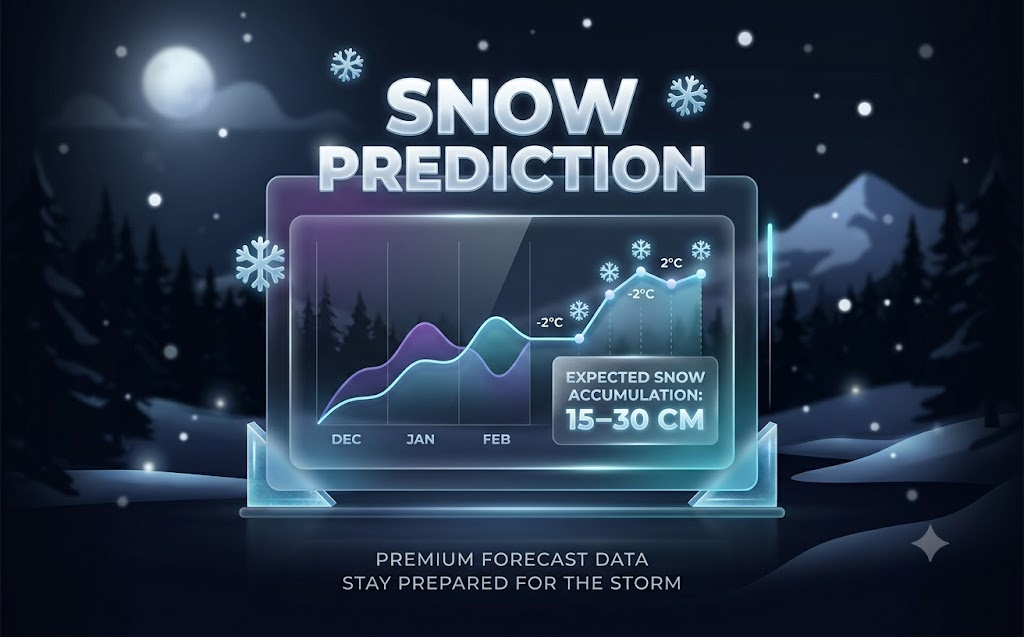
Winter weather can be beautiful, but it also brings challenges that affect travel, work, school, and outdoor activities. Understanding Snow Prediction helps people prepare for changing weather conditions before snowfall begins. Whether you are planning a road trip, checking if schools may close, or simply enjoying winter sports, accurate forecasts make a significant difference. Modern technology has greatly improved the ability to predict snowfall, giving people more confidence in planning their daily routines.
What Is Snow Prediction?
Snow Prediction is the process of estimating when, where, and how much snow will fall. Meteorologists analyze atmospheric conditions such as temperature, humidity, air pressure, wind patterns, and moisture levels to determine the likelihood of snowfall. Computer models process millions of weather observations to create detailed forecasts that improve over time.
Unlike simple weather forecasts, snow predictions focus specifically on frozen precipitation. They estimate snowfall timing, intensity, accumulation, and the duration of snow events. This information is valuable for families, commuters, emergency services, businesses, and winter sports enthusiasts.
Why Snow Prediction Matters
Reliable snow forecasts help people make informed decisions before winter storms arrive. Heavy snowfall can create dangerous road conditions, delay flights, close schools, and interrupt daily activities. Accurate predictions reduce risks by allowing enough time for preparation.
Communities also depend on snow forecasts to organize snowplow operations, road treatments, and emergency response teams. Businesses adjust work schedules, while travelers may change their plans based on expected weather conditions. Even homeowners benefit by preparing heating systems and stocking essential supplies.
How Meteorologists Predict Snow
Weather experts collect data from satellites, radar systems, weather balloons, ocean buoys, and ground observation stations. These tools measure atmospheric conditions continuously throughout the day. The information is then entered into advanced computer models that simulate future weather patterns.
Meteorologists compare several forecasting models before issuing snowfall predictions. Human expertise remains important because weather systems are complex, and computer models sometimes produce different outcomes. By evaluating multiple data sources, forecasters improve the overall accuracy of predictions.
Factors That Affect Snowfall
Several weather conditions must come together for snow to form. Air temperature is one of the most important factors. Generally, temperatures near or below freezing allow snowflakes to survive their journey to the ground.
Moisture is another essential ingredient. Without sufficient moisture in the atmosphere, snowfall cannot develop even when temperatures remain low. Wind direction, atmospheric pressure, and the movement of weather fronts also influence where snow falls and how much accumulates.
Mountain ranges, lakes, and coastal areas can significantly change snowfall patterns. Local geography often creates microclimates that produce different snowfall amounts within short distances.
Types of Snow Forecasts
Weather services provide several kinds of snow forecasts depending on the user’s needs. Short-term forecasts cover the next few hours and help commuters prepare for changing road conditions. Daily forecasts predict snowfall over one to three days and are useful for travel planning.
Extended forecasts look several days or even weeks ahead. While these long-range predictions identify general weather trends, they become less accurate as the forecast period increases. Seasonal outlooks estimate whether winter may be snowier or milder than average rather than predicting individual storms.
Technology Behind Snow Prediction
Modern forecasting relies heavily on powerful supercomputers capable of performing billions of calculations every second. These computers process enormous amounts of weather data from around the world and simulate atmospheric changes using mathematical equations.
Artificial intelligence and machine learning now assist meteorologists by recognizing patterns that traditional methods may overlook. High-resolution weather models also provide neighborhood-level forecasts, allowing people to receive more localized snowfall predictions than ever before.
Satellite imagery offers continuous monitoring of cloud systems, while Doppler radar tracks precipitation movement in real time. Together, these technologies greatly improve forecast reliability.
Understanding Snowfall Amounts
Snowfall forecasts usually estimate how many inches or centimeters of snow may accumulate. However, actual snowfall can vary depending on temperature, wind, and snow density. Light, fluffy snow often produces greater accumulation than wet, heavy snow containing more moisture.
Forecasts sometimes provide a range instead of one exact number. This approach reflects natural uncertainty because small atmospheric changes can produce different snowfall totals. Paying attention to forecast updates helps people stay informed as storms develop.
Snow Prediction for Travel
Travelers benefit greatly from monitoring winter forecasts before leaving home. Heavy snow can reduce visibility, create icy roads, and increase accident risks. Airlines may delay or cancel flights when severe winter weather affects airports.
Checking snowfall predictions allows travelers to choose safer departure times or postpone unnecessary trips. Drivers should prepare emergency kits containing blankets, water, food, flashlights, and phone chargers in case road conditions worsen unexpectedly.
Public transportation services also use snow forecasts to adjust schedules and deploy additional maintenance crews during major storms.
Snow Prediction and School Closures
Many parents rely on snow forecasts to anticipate possible school closures or delayed openings. Education authorities monitor predicted snowfall, road conditions, temperature, and public safety before making final decisions.
Although snowfall predictions provide useful guidance, schools usually wait until conditions become clearer before announcing closures. Families should continue checking official school communications rather than relying solely on weather forecasts.
Accurate snowfall estimates help schools organize transportation, heating systems, and emergency planning throughout the winter season.
Challenges in Predicting Snow
Despite significant advances, predicting snowfall remains one of meteorology’s greatest challenges. Tiny changes in temperature can determine whether precipitation falls as snow, rain, sleet, or freezing rain. A difference of just one or two degrees may completely change the forecast.
Storm tracks also influence snowfall amounts. If a storm shifts slightly north or south, some areas may receive heavy snow while neighboring communities experience very little accumulation. Wind can further complicate predictions by causing drifting snow and uneven distribution.
Meteorologists continually refine their models to reduce forecasting errors, but uncertainty remains part of every winter weather prediction.
Tips for Using Snow Prediction Wisely
People should avoid relying on a single forecast source. Comparing information from several trusted weather providers offers a better understanding of possible outcomes. Forecasts should also be checked regularly because conditions can change quickly as storms approach.
Understanding forecast probabilities helps users interpret predictions more realistically. A high chance of snow does not always guarantee major accumulation, while a low probability still means snowfall remains possible. Staying informed allows individuals to respond appropriately as forecasts become more accurate.
Preparing before storms arrive is always better than reacting after hazardous conditions develop. Keeping winter supplies ready, charging electronic devices, and monitoring official weather alerts improve overall safety.
Future of Snow Prediction
The future of snowfall forecasting looks increasingly promising as technology continues advancing. More powerful computers will process larger datasets at faster speeds, allowing meteorologists to generate highly detailed local forecasts. Improved satellite systems will capture clearer atmospheric observations, while artificial intelligence will continue identifying weather patterns with greater precision.
Researchers are also developing smarter forecasting models that combine global weather information with local terrain data. These innovations may significantly improve snowfall predictions in mountainous regions and urban environments where forecasting has traditionally been more difficult.
Mobile applications, wearable devices, and connected vehicles may soon receive personalized snowfall alerts based on exact locations. This level of customization will help people make safer travel decisions and prepare more effectively for winter weather.
Conclusion
Understanding Snow Prediction provides valuable knowledge for anyone living in or traveling through snowy regions. Accurate forecasts support safer transportation, better planning, and improved emergency preparedness during winter storms. Although predicting snowfall remains scientifically challenging, advances in technology continue making forecasts more reliable each year.
By following trusted weather updates, understanding forecast limitations, and preparing in advance, individuals can reduce winter-related risks and enjoy the season with greater confidence. Snow prediction is more than just knowing whether snow will fall; it is an essential tool that helps protect lives, property, and daily routines throughout the winter months.